New 48 x 40 pallets
The grocery trade’s footprint and the most common new wood pallet in the country. For outbound freight, distribution and anything a customer’s dock expects.
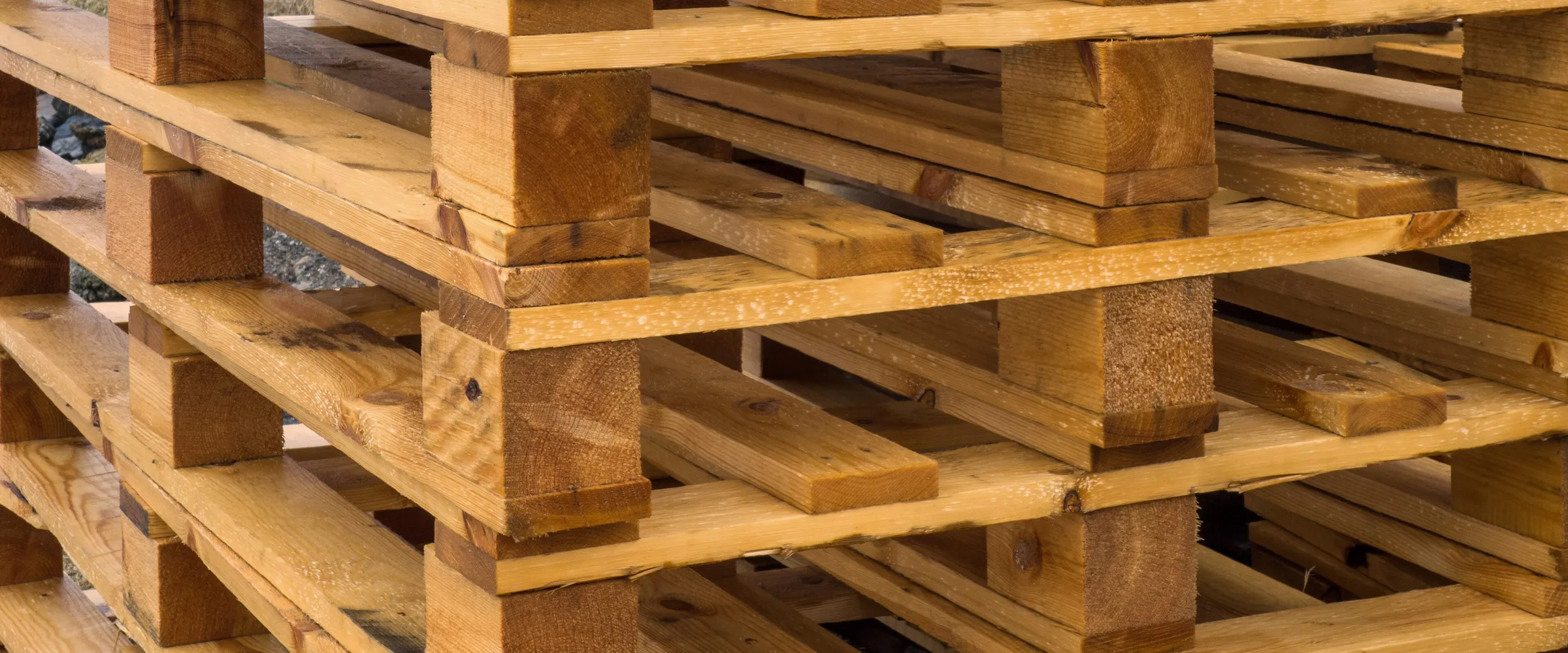
New wood pallets, specified for the load they carry.
Send us the size, the load and how it gets moved, and we write the pallet up as a build spec and quote new pallets to it, from a plain 48 x 40 to a footprint nobody else stocks.
Every pallet here is new: all-new lumber, never shipped on, built to a written spec rather than pulled from a sorted stack.
The grocery trade’s footprint and the most common new wood pallet in the country. For outbound freight, distribution and anything a customer’s dock expects.
 Illustrative image
Any length and width your product needs. For machines, panels, coils and loads that hang over a 48 x 40 or rattle around on it.
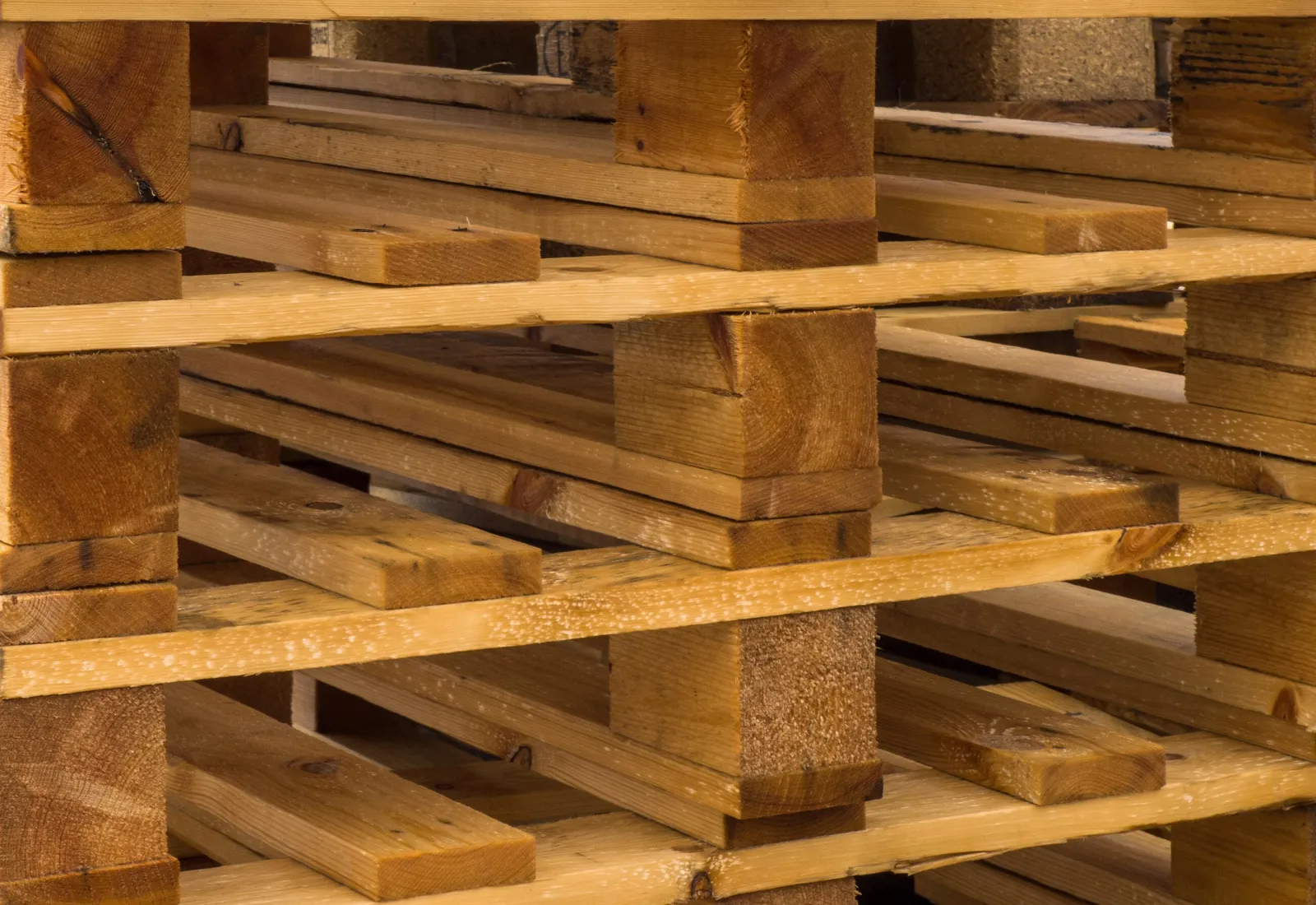
Nine blocks instead of stringers, so forks and jacks enter from every side. For heavy loads handled again and again.
 Illustrative image
Runners and a top deck, no bottom deck. For machines and loads that are set down once and stay put.
 Illustrative image
When the freight crosses a border, heat treatment and the ISPM 15 mark are written into the spec like any other line.
The footprint only says how much floor a pallet takes. Whether it carries your load, racks without sagging or survives a pallet jack is decided by the lines below. Each one is a question we ask before we quote.
| No. | Member | What it does |
|---|---|---|
| 1 | Top deck boards | Run across the stringers; count and width set the deck coverage. |
| 2 | Lead boards | The deck board on each outside edge, top and bottom; the first board a fork meets. |
| 3 | Stringers | The long supports under the deck; their length is the first number in the size. |
| 4 | Bottom deck boards | Spread the load on the floor or a conveyor and tie the stringers together. |
No single standard covers every pallet, so the trade works from a short list of footprints that particular industries settled on. In inches, stringer length first.
| Footprint | Listed for | Source |
|---|---|---|
| 48 x 40 | Grocery and most US freight: the GMA footprint | PHS, Wikipedia |
| 42 x 42 | Beverage | Interlake Mecalux |
| 48 x 48 | Drums and the chemical sector | Interlake Mecalux |
| 48 x 45 | Automotive | Wikipedia |
| 48 x 42 | Chemical and beverage | Wikipedia |
| 44 x 44 | Drums and chemical loads | PHS |
| 40 x 40 | Dairy | PHS |
| 48 x 36 | Beverage, shingles, packaged paper | PHS |
Plants, distributors, warehouses and exporters that need the same pallet every time, or one pallet nobody has built before. Each industry ships a different load, so each has its own page on the footprint and build that carry it.
We supply anywhere in the United States, and the state pages show which industries in each state ship the most on pallets.
| No. | Member | What it does |
|---|---|---|
| 1 | Top deck boards | More of them, closer together, for dense or point loads. |
| 2 | Lead boards | Often specified thicker on a heavy build, since they take the first hit. |
| 3 | Stringers | Four or more, so the deck boards span less between supports. |
| 4 | Bottom deck boards | A fuller bottom deck spreads the weight on a floor or rack. |
What to send. The size, or a drawing of the product if there is no size yet. The load weight per pallet. How it is handled and stored. How many you need, once or each month. The ship-to ZIP.
What comes back. The pallet written out as a spec, line by line, so you can see what you are buying, and a price against that spec. If anything in the request leaves the build open, we ask before we price it.
You don’t need the trade’s words to ask. What to send for a quote goes through each line, and pricing explains what moves the number.
Start with what sits on the pallet and how it moves. The size is the easy part.
Not sure of a line? Leave it blank. Size, load weight and quantity are enough to start a quote.
A stringer pallet sits on three or more long boards and suits most one-way and plant-to-warehouse freight. A block pallet sits on nine blocks, takes forks from all four sides and stands up better to heavy, repeated handling. Tell us how the load moves and we quote the build that fits it.
The stringer length. A 48 x 40 has 48-inch stringers and 40-inch deck boards. Write your size that way and nobody has to guess which way the boards run.
Say so on the request. A pallet that is fine stacked on the floor can sag when it spans two rack beams, so racked loads usually get more or thicker deck boards, or a different build.
Wood packaging that crosses a border is treated and marked under ISPM 15. If your pallets leave the country, put that on the request and the treatment is written into the spec.
When the load sits still: a machine, a coil or a crate that is set down once and lifted from the top or with forks under the deck. A skid has runners and a top deck, and no bottom deck.